Looking for a guest speaker to do an AI talk at your school’s next faculty meeting? Send us an email: support@sunriseclassroom.ai
There are two kinds of moments in a classroom. The first is when a student raises their hand with bold confidence, eager to test an idea out loud. The second is when a student hesitates, weighing whether their thinking is ready for public view. Both moments are signs of something important happening. Both are invitations to shape how students see themselves as learners.
Psychologist Carol Dweck gave us the phrase “growth mindset,” which sounds like something you would buy in a reusable glass jar at a farmers market. In reality, it is the radical idea that intelligence is not fixed. Brains are not concrete. They are more like a sourdough starter. Feed them, work them, let them rest, and they expand in slightly magical ways.
For new teachers, this concept arrives at the exact moment you are wondering whether you, personally, have a fixed mindset about your own career choice.
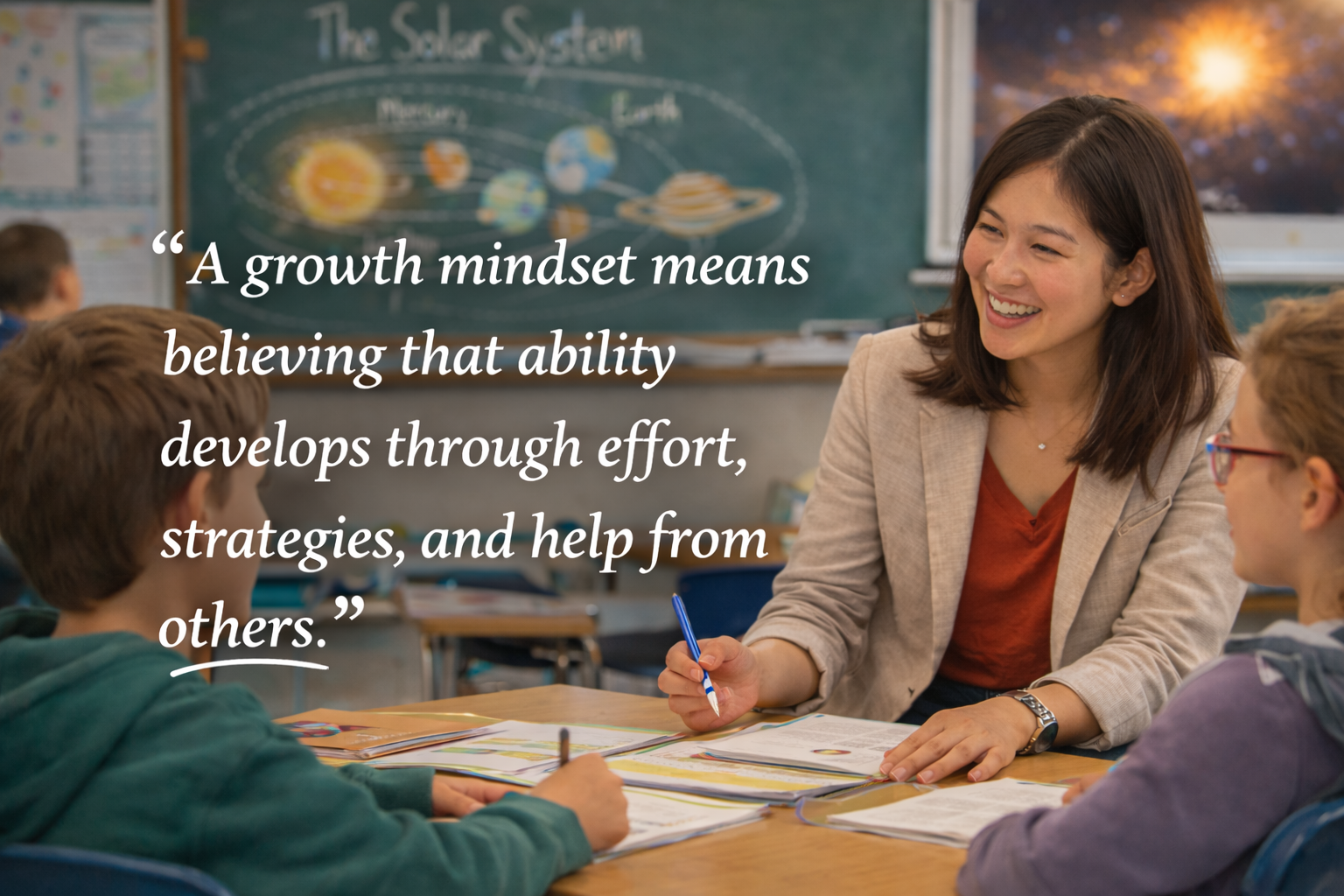
A growth mindset means believing that ability develops through effort, strategies, and help from others. A fixed mindset means believing that talent is predetermined, stamped on your forehead at birth like a barcode. Classrooms quietly reveal which belief system is running the show. Students who say, “I’m just bad at math,” are not confessing a lack of skill. They are announcing a theory about themselves.
New teachers often hear those declarations and feel an immediate urge to argue. Arguing rarely works. Growth mindset is not a slogan battle. It is a slow cultural shift.
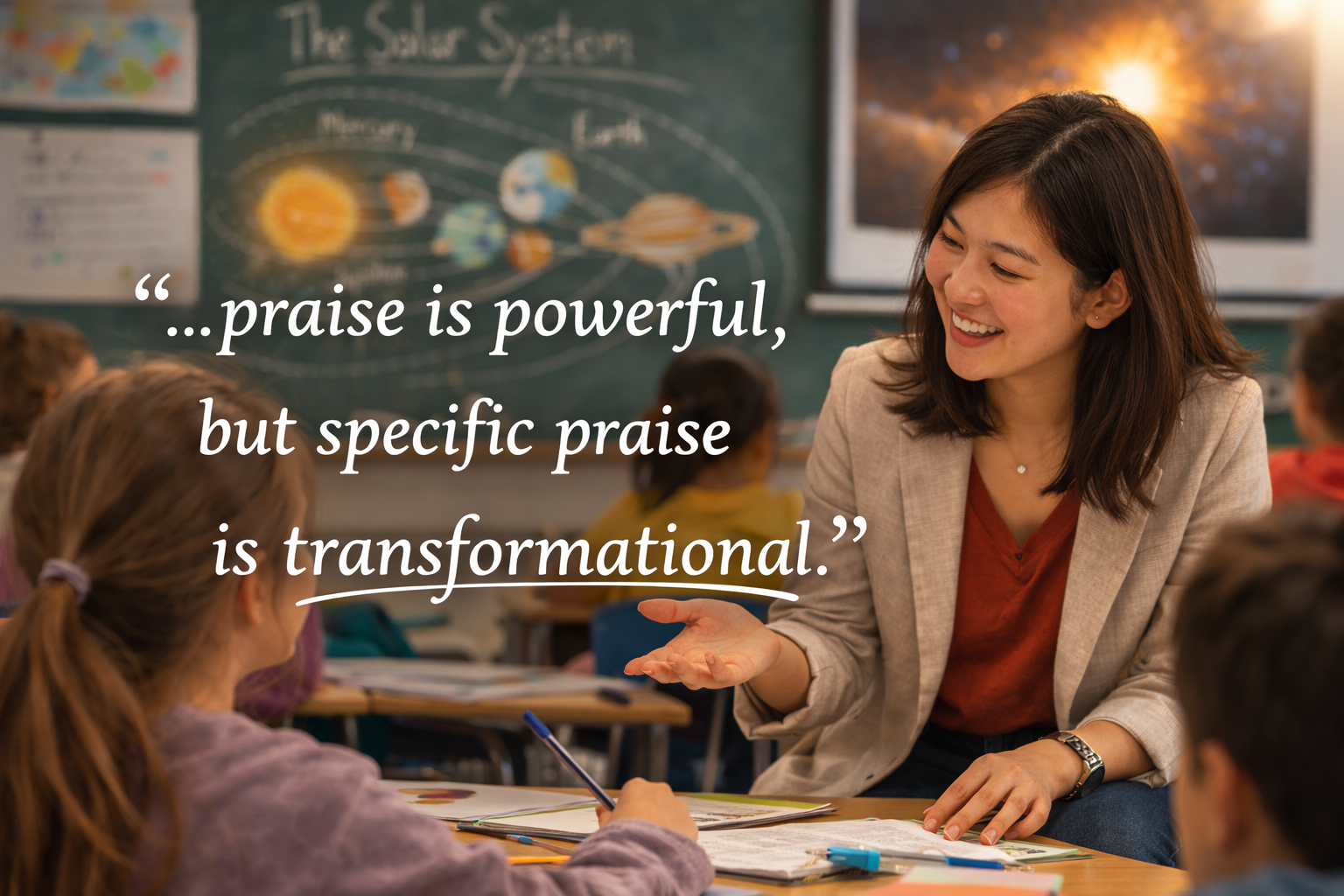
The first lesson from Dweck’s research is that praise is powerful, but specific praise is transformational. Telling a student, “You’re so smart,” plants the idea that smart is an identity you either own or lose. Telling a student, “You tried three strategies before that one worked,” highlights process. Process is controllable. Identity feels permanent.
New teachers frequently want to boost morale. That instinct is correct. The trick is to praise effort, strategy, and persistence rather than innate brilliance. When students tie success to effort, they begin to see struggle as data instead of destiny.
Struggle, in fact, is the entire point.
A classroom without struggle is either a miracle or a sign the work is too easy. Growth mindset reframes mistakes as evidence of learning in progress. This shift requires modeling. When you mispronounce a student’s name, forget the homework policy you invented yesterday, or accidentally project your grocery list instead of the lesson slides, you are presented with an opportunity. You can narrate the mistake calmly and adjust. Students watch this more closely than you think.
Students are excellent anthropologists. They study adult behavior for clues about how to survive.
The second lesson is that language shapes climate. Adding the word “yet” to a sentence changes its emotional architecture. “I can’t write a thesis statement” feels final. “I can’t write a thesis statement yet” opens a door. The word is small enough to fit on a sticky note and powerful enough to rewire a belief.
New teachers can normalize the “yet” language by embedding it into feedback. Comments like, “Your evidence is not fully developed yet,” imply progress is expected. Feedback becomes a roadmap rather than a verdict.
The third lesson involves risk. Growth mindset thrives in environments where intellectual risk is safe. Students need to know that wrong answers will not be treated as moral failings. This does not mean lowering standards. It means separating performance from identity.
A student who fails a quiz has produced a low score. The student is not a low score.
New teachers often fear losing authority if they loosen the emotional stakes. Authority, however, comes from consistency and clarity, not from intimidation. Clear rubrics, transparent expectations, and structured opportunities to revise send a powerful message: improvement is part of the design.
Revision is growth mindset’s favorite hobby.
When students are allowed to revise work, they learn that learning is iterative. The brain builds through cycles. Draft, feedback, adjustment, repeat. Teachers who build revision into grading systems communicate that development is normal. Students begin to see grades as checkpoints instead of permanent labels.
New teachers can also apply growth mindset to themselves. The first year of teaching feels like being launched into orbit with a clipboard. Lessons flop. Transitions wobble. Observations loom like jury duty. Viewing these moments through a fixed mindset turns every misstep into evidence of inadequacy. Viewing them through a growth mindset turns them into professional development in real time.
Professional identity is not static. Classroom management improves. Instructional clarity sharpens. Relationships deepen. Teaching is a craft, not a personality trait.
Dweck’s work does not promise instant transformation. It offers a framework. Beliefs about intelligence influence effort. Effort influences performance. Performance influences future belief. The cycle can spiral upward or downward depending on the narrative students and teachers tell themselves.
Growth mindset is not about pretending everything is possible. It is about recognizing that ability expands with deliberate practice and support. The classroom becomes a laboratory for this experiment.
New teachers stand at the center of that laboratory. Your reactions to mistakes, your language about effort, your grading structures, and your own vulnerability signal what kind of intellectual culture you are building. Students absorb those signals daily.
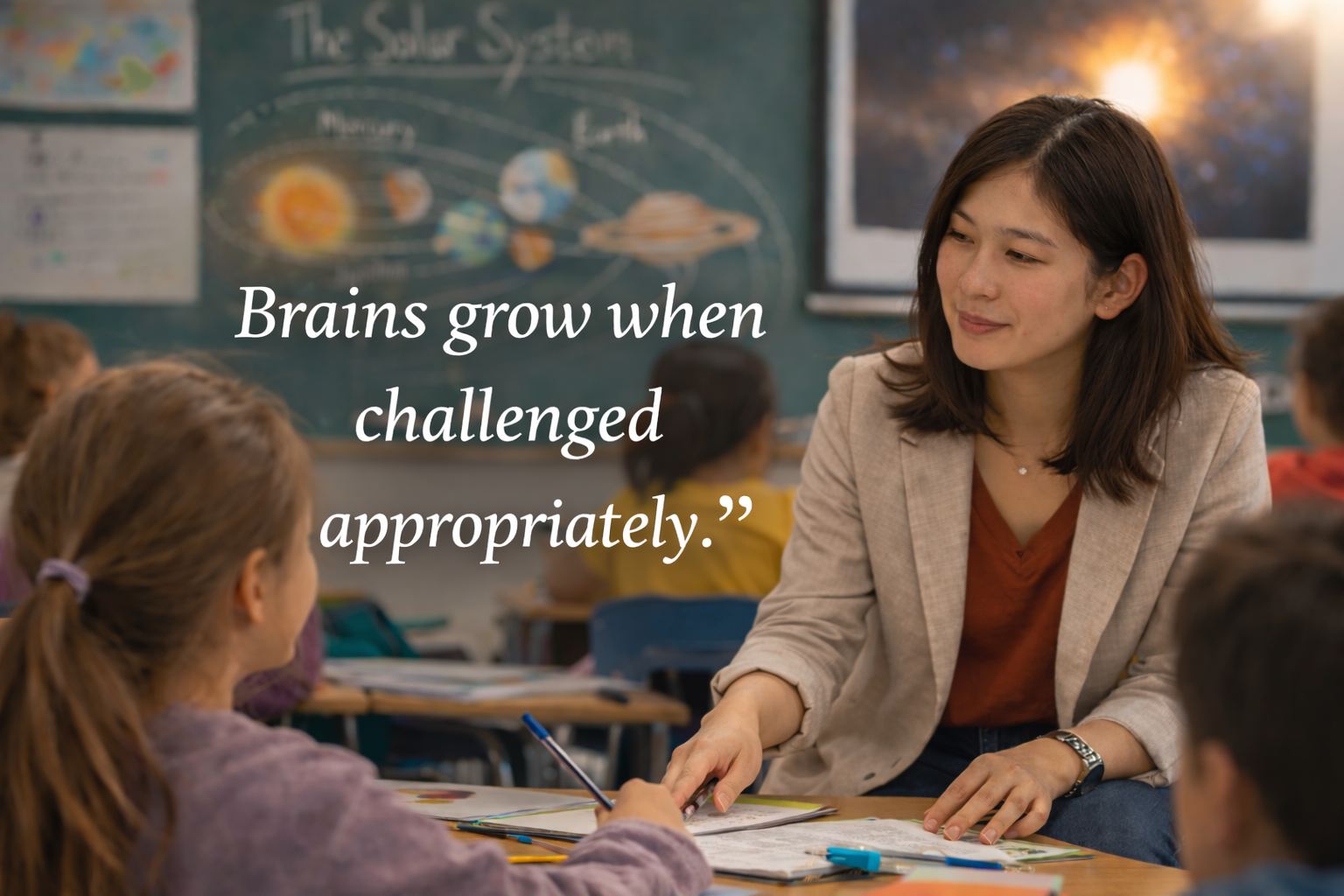
Brains grow when challenged appropriately. Confidence grows when effort pays off. Classrooms grow when the adults inside them believe growth is possible.
A growth mindset is less about inspirational posters and more about daily choices. It is the choice to treat mistakes as information. It is the choice to praise strategies over talent. It is the choice to see potential where others see limits.
Teaching with a growth mindset does not eliminate frustration. It reframes it. Frustration becomes evidence that something meaningful is happening. In a classroom, that is often the clearest sign that learning is underway.
Need help developing lessons within a UDL framework? Want to incorporate AVID strategies into your next lesson? Try Lesson Optimizer by Sunriseclassroom.ai.